Cheers
Amit

Thankfully, we were going to Lonavala and had the option of buses readily avaliable. So that was not a problem and we reached Lonavala by bus at almost the same time as the train would have taken us. Lonavala on Friday morning was comparitively quiet. But come Saturday morning, and it changes completely. Suddenly, thousands of people descend over the town like a swarm of locusts, especially in the monsoon. Restaurents are full and the roads are jammed just like in Mumbai (we took an hour to cover a 4km stretch between the Valvan Dam to Lonavala station). While Lonavala is certainly beautiful (check out the pics), the abuse it bears every weekend certainly does not do it any good. It must be
acknowledged though, that its economy is very much dependent on Mumbaikars and Puneites and the money they bring in. That said, it is still quite distressing to see garbage (prime amongst them were the left-over corn cobs) thrown nonchalantly on the road. Which is why I believe that the Taj being amongst the seven wonders will do us no good until we have an attitude that respects nature and our heritage.Hindi movies have always been remembered for their music, if not anything else. Down the years, the glorious tradition of Hindi film music has always been a part of our way of life, whether it be bands playing at marriages or wannabe Kishore Kumars and Asha Bhosle's trying their luck at the dime-a-dozen talent searchs. Lyrics, to me however, are at the heart of Hindi music. Through lyrics, one can convey the whole gamut of emotions: be it love, tragedy, happiness. You name it and Hindi movies have always had a song for each occassion, that too with the most appropriate words. Great poets like Sahir Ludhianvi (the badshaah of tragedy), Majrooh Sultanpuri, Pradeep (with the immortal 'Ae Mere Watan Ke Logon') and down to Anand Bakshi, Gulzar etc. have embellished silverscreen with the most heart-touching lyrics.
Recently, however, this trend seems to be dying out. As with fast-food, today seems the day of fast-lyrics. Lyrics are churned out instead of being written (samples like 'Tu mere sapnon ki rani hui, tu meri prem diwaani hui' etc abound in today's movies). No wonder then, we remember the words of the old melodies of the 60s and 70s rather than the fleeting words put together today. But as with any dark cloud, there is always a silver lining. Hence, presenting below, are five of my favorite poems of movies released this decade. These are enough to prove that good Hindi poetry is still a part of Bollywood today.
These are, in no particular order:
1. Ladki Kyon Na Jaane Kyon Ladkon Si Nahi Hoti (Hum Tum): The fact that Men and Women simply belong to different planets has been illustrated with vivid and real-life examples. You listen to the song and realize that how true it is. Lines like "jeene ka tumko dhang sikhlati hai, tumhe janwaar se insaan banati hai " or " woh sharmati hai, kabhi chupaati hai, ladki jo haan keh de, use nibhati hai " describe the arguments and feelings between husband and wife, boyfriend and girlfriend. Notice the superb one-liners in between in the voice of the lead actors. Simply written.
2. Kuch to Hua Hai, Kuch Ho Gaya (Kal Ho Na Ho): Another simple but truly oustanding poem. Describes the feelings of your first time in love to the T. Sample this: 'cheeze main rakh ke bhool jaati hoon, bekhalayi main gungunaati hoon, ab akele main muskuraati hoon' or 'dhyaan ab apna jyaada rakhta hoon, sochta hoon main kaisa lagta hoon, aaina ho to dekh leta hoon'. How very true na ? I have actually had friends on campus sitting in front of the mirror and ensuring they are tip-top before going on a date. A song that anyone in love can relate to.
3. Yeh Jo Des Hai Tera (Swades): Simply put, this poem raises goose pimples. It may not be quite in the league of that stunner 'Chitti Aayi Hai' (Naam, 1985) but its still quite superlative. Now I have never gone out of my country for work but even then, whenever i listen to this song, deep down in my heart, my country calls me. Now I cannot imagine my friends/relatives working in all corners of the world not being touched by this. Friends in US, Singapore, UK and elsewhere: answer me truly. Doesnt this song pull a string somewhere deep down ??? One line that stands out: " tujhse zindagi - hai yeh keh rahi - sab to paa liya - ab hai kya kami - yunh to sare sukh hai barse - par dur tu hai apne ghar se - aa laut chal tu ab dewaane - jahan koi to tujhe apna maane - awaaz de tujhe bulaye - wohi des'.
4. Chale Chalo (Lagaan): The poem of the underdog. One that urges you to keep fighting all odds. Very well composed. 'Baar baar haan, bolo yaar haan, apni jeet ho, unki haar haan' or 'koi na ab roke tujhe, toke tujhe, tod de bandhan saare, mila kya hoke tujhe nirbal tu hi bata' . The kind of words that you want to hear when you are feeling really down.
5. Mitwa (Kabhi Alvida Na Kehna) : The feeling of denial and the pain it causes have seldom been captured so beautifully. Dont we all remember the time when we loved someone but were either ignorant or scared to admit it. 'Yeh ho jai unkahi, yeh jo hai ansuni, wo baat kya hai bata !!!' or 'teri nigahen paa gai raahen, par tu yeh soche jaao na jaaon, yeh zindagi jo hai naachti to, kyon bediyon main hai tere pao' urge to let go of our inhibitions and express ourselves. Amazing song !!!
Couple of other close contenders: 'Yeh Taara Woh Taara' (Swades), Kal Ho Na Ho (Title song). Also had my Punjabi been better, 'Yaar Mangiyasi' (Kaante) might have figured in the above list.
Its not coincidence that ALL of the above songs are written by the same person. Javed Akhtar personifies good and simple poetry in Hindi movies today. Alongwith Gulzar (who comes second only because of his excessive use of Urdu - a language i hope to understand someday and hence appreciate his poetry), he has kept the flame and legacy of Sahir Ludhianvi, Pradeep etc alive.
Would love to hear your feedback and opinion regarding this !!!
Cheers
Amit
So the World Cup has finally ended, albeit in circumstances that any sports-lover would not have wished to see. Not only was the final mostly a one-sided affair, the final overs of that 'contest' were a sad sight. Dont think any other global sporting event has climaxed in near darkness with the spirit of competition relegated to the background. And to think that the farce was going on in front of a world audience, not to mention that the governing body of the sport was majorly responsible for it, is hardly the right advertisement for the game. As expected by almost everyone (though not neccessarily hoped by most !!!), the Aussies pocketed their third straight crown.
The World Cup has been severly, and mostly correctly, criticized by all and sundry on several counts: too many teams, lots of matches, exhorbitant ticket prices, lot of ICC red-tape at the venues, marketing considerations presiding over the game and so on. Clearly, most of the charges are quite right and the ICC would need to take a long, hard look at the way the game is run. However, I still feel the competition format was not way off the mark. Initial group stage of 3 matches per team followed by a gruelling 6 games in the Super-Eights was, and still is, a very good format. However, unfortunately for the ICC, Ireland and Bangladesh spoilt the party. By eliminating the two big commercial powerhouses from the tournament, they ensured that half the television audience stayed away from the Super Eights (I guess 9 out of 10 people in India who feel that the tournament was long and boring feel so because their team were knocked out). Sadly, in the process, Ireland and Bangladesh became easy meat in the Super Eights (the win against South Africa did not do much damage as far as the tournament was concerned). I have no doubt that had India and Pakistan been in the Super Eights, it would have been a battle royale between atleast the 7 other teams and, who knows, the winning streak of the Aussies might have been snapped by some, simply because of the high level of competition. The Super Eights would truly have been 24 exciting games on offer. So lets not blame the ICC on that count atleast. The tournament became long and boring not because of the no. of matches staged, but because there was a high proportion of mis-matches. And this is something the ICC had nothing to do with. I am not too sure what other format can the ICC follow. Hopefully by 2011, we will have a brand new format.
Regarding the organization itself, there is not much you can fault with the local organizing committees. Most of the venues looked suitably upgraded (especially the Kensington Oval which could have rivalled any other ground in the world), although it was sad that almost all matches were watched by some empty seats. It finally took the retirement of the local God to ensure the first full house in the Cup. The pitches actually were quite good. Infact places like Port-of-Spain, Guyana and Bridgetown helped the bowlers, something which is uncommon in one-dayers in other parts of the world, including Austalia. All the world-class bowlers performed excellently throughout the World Cup. On the other hand, no pitch was a bowler's dream either. Good batsman found the conditions to their liking as well, which is the way it should be. And apart from the final, there was hardly any rain disruptions throughout the seven weeks. So the local orgainzing committees did their job pretty well.
But for me, there are two bigger issues that came out from this World Cup (and generally, from the way the game is headed):
1. The fact that one nation can dominate a sport so comprehensively so as not to even lose a World Cup game for eight years (it will be 12 years by the time the next edition comes)
2. The balance between bat and ball in the modern-day game
I will touch upon these issues in my next post, which will also be the last on cricket for a while. Its about time I switched my attention to other more important matters.
Cheers
Amit
Have finally finished reading a magnum opus of a book. Magnum opus not because of any great literary achievements the book has had and not because the author is any stalwart. Magnum opus because of its sheer size (865 pages full of text only, and that too of small font) and because of the fact that it is in my mother tongue Marathi (the written word of which, I hate to admit, takes effort out of me to read). Anyways, after 4 months of chipping away, I finally managed to finish it, surviving my wife’s disapproving looks and comments J.
So what is this book about, you might ask? The book is titled ‘Duryodhan’ by Kaka Vidhate. As the name suggests, it is the story of the eldest Kaurava prince. It starts with his father Dritrashtra lamenting about being a blind prince just before his wedding with Gandhari and ends with Duryodhan dying near the river-bank on the last day of the Mahabharata war. Now the Mahabharata has always fascinated me since childhood. For me, it is quite simply, the greatest story ever sold (and even the ultimate soap opera J). BR Chopra did an outstanding job transferring the epic on the small screen (someday, I will buy the entire collection of DVDs) and hopefully, some director some day will craft an all-start-cast on the big screen. But this book was different from all other books that I have read on the Mahabharata. For once, this was more of a biography rather than being about the actual war (the war only takes about the last 200 pages or so). But more importantly, this was a view from the ‘other’ side, as it were. Though I have read and enjoyed ‘Mrityunjay’ (another outstanding book on my Mahabharata hero Karna, which, strangely enough, I read while doing my MBA at Bangalore), this book tells the epic in a different light, from the eyes of someone who, as history tells us, is the villain of the piece.
But the book raises several questions forcing us to re-look our generally accepted beliefs about the Mahabharata. For example, history tells us that the Pandavas were bound to win the war because they were on the side of truth, of dharma. But take a closer look at what actually happened in the war. Each one of the Kaurava commanders were killed rather than defeated (‘hatya’ as the book calls it as opposed to ‘vadh’ which is the Kshatriya way of overcoming your enemy in battle). Bhishma was killed when he refused to fight Shikhandi, Drona was mercilessly beheaded after he laid down his arms on hearing the false news of his son’s death. And Karna was defeated in the only way Arjuna could have, when he was without his weapons trying to get his stuck wheel out. And all this is generally accepted, not some new theory the book is trying to put forth. Against this, the only legitimate and accepted ‘adharm’ from the Kaurava side was in killing Arjuna’s son Abhimanyu (which the book incidentally denies but lets go with widely held and accepted ‘facts’.) So, atleast as far as the actual war is concerned, there is not much doubt on who acted according to ‘dharma’ and who did not.
The other important point that the book brings out is that Duryodhana lost the war not because he was in the wrong, but because of all his trusted aids betrayed him. Bhishma and Drona could not kill the Pandavas because they were so dear to them. But most importantly, Karna also did him in. He was the rock on which Duryodhana had pinned his hopes on, knowing fully well that in a legitimate battle, even Arjuna could not stop him. But just a few days before the war, out came Krishna (who, not surprisingly, is painted in more black than white by the book) and told Karna the story of his birth, shattering Karna from within. This led to Karma promising Kunti that he would not kill any other Pandava except Arjuna. In the actual war, Karna had each one of the 4 remaining Pandavas at his mercy, had he killed any one of them, the war would have stopped then and Yudhistir would have accepted defeat. So that left Duryodhana with absolutely no friends in battle. He was a marked man from the time the battle started and fate caught up with him eighteen days later (that too, courtesy of a cowardly act from Bheem who hit Duryodhana below the belt after realizing that he was not going to win otherwise).
All in all, the book tells an interesting and often, heart-touching tale of a prince and prospective (and maybe, even rightful) emperor wronged by fate, his father, his friends and his dear ones, leaving him to wage a lonely battle to get what he regarded as rightfully his in life. And, on top of all this, history regards him as a villain and the instigator of the war.
After all, what is history but not a story told by the victorious???
Cheers
Amit
According to me, the most enduring and (I daresay) the greatest physical feat that mankind does is the Marathon !!.. Having read Lance Armstrong’s autobiography, I acknowledge that cycling (in the Alps in cold, windy and rainy conditions) does come close. But still, I have always admired the gritty Marathoners and have wondered as to how anyone can actually run 42km (that is more than the distance between Churchgate and Borivali, between which most of the local trains ply). The maximum I have ever managed to run at a stretch is about 2km !! J. So it has always been my dream to actually experience the marathon and see what drives these athletes to the limits of human endurance !!
For the past 5 years, the Mumbai Marathon has provided the citizens of Mumbai with a platform to take part and experience the Marathon. Since 2005, I have always wanted to be a part of the Mumbai Marathon but something or the other always prevented it. So when the Mumbai Marathon 2007 came along, I decided not to miss it at any cost, even though I was just back from a 3 week post-marriage vacation and it was more than a month since I saw the gym!! Nevertheless, with all this (and without the whole-hearted approval of my wife J), I finally landed at Azad Maidan at 6 am in the morning of 21 January 2007, proud of the fact that I atleast managed to show up for the big event (as an official participant with a bib no. on my back)…
Keeping watching this space for what actually happened….
Cheers
Amit

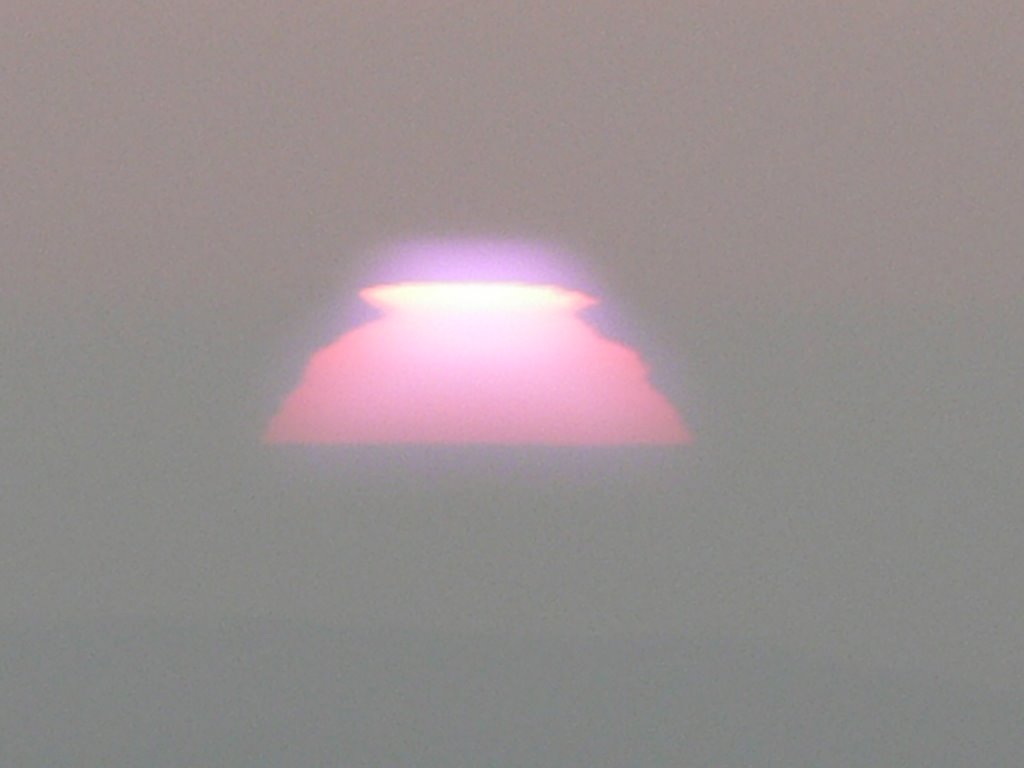
a quick breakfast, we were off to Pratapgarh fort (around 20 km). This historic fort is best known as the place where Shivaji killed the Mughal general Afzal Khan. It has a temple on the top alongwith a very good exhibition-sale of handicrafts.. after a quick tour of the place we were back for a long overdue lunch at the resort by around 3 pm.... the lunch was also too good.. or maybe it was because we were so famished.. in any case, after a hearty lunch we hit the sack.. initially we had planned to visit a few points before going to the Bombay (Sunset) Point.. but we got up late and just about managed to reach Sunset Point in time to see the sun dissapear over the western horizon..
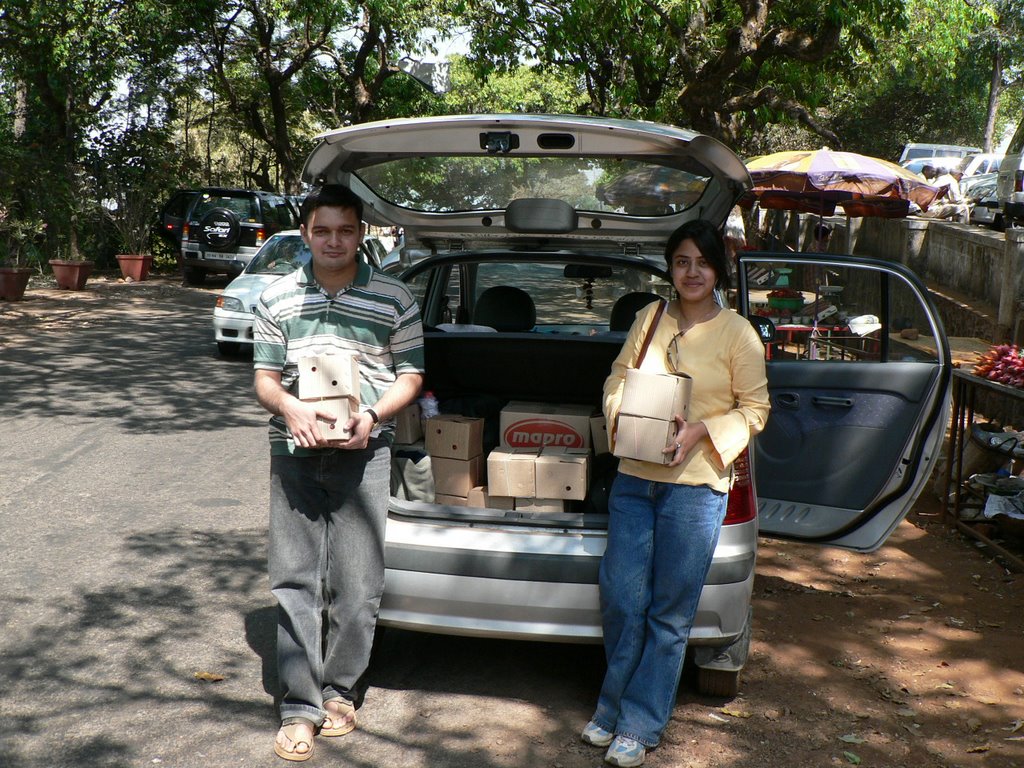
whatever points we could cover.. prominent amongst them was Arthur's seat and Elphinstone point.. the former is a good one with a viewing platform from which one can observe the valley both on the west and east... from there we went off to the Mafco's farms and store.. this is the the main firm producing and dealing in strawberry products... and guess what, between the five of us, we picked up an astounding 15 kg of strawberry's, not to mention bottles of strawberry crush etc.. all of this were dumped at the back of the car..